

Have you ever wondered what your child actually learns in Science class at Dehong Elementary School? How do they explore the scientific world in English? And how is the seemingly abstract concept of “inquiry-based learning” brought to life in real classrooms?
To enable parents to experience the essence of the Dehong science classroom first-hand, the Elementary EML (English-Medium Learning) teaching team at Dehong Shanghai specially designed an unprecedented Parent Academy Science session. We invited Grade 5 parents to come onto campus, set aside their parent identity, and transform into “students” for an afternoon to personally experience the hands-on, engaging Science lessons their children enjoy every day. Now, let’s revisit this journey of exploration together.
Values Lead the Way : How Does the Science Curriculum Empower Student Growth?
The session began with Mr. Ian Sanidad, EML Lead Teacher of the Elementary School, introducing the guiding principles of Dehong’s Science curriculum:“At Dehong, we strive to nurture learners who are curious questioners, thoughtful researchers, confident communicators, and creative problem-solvers.”
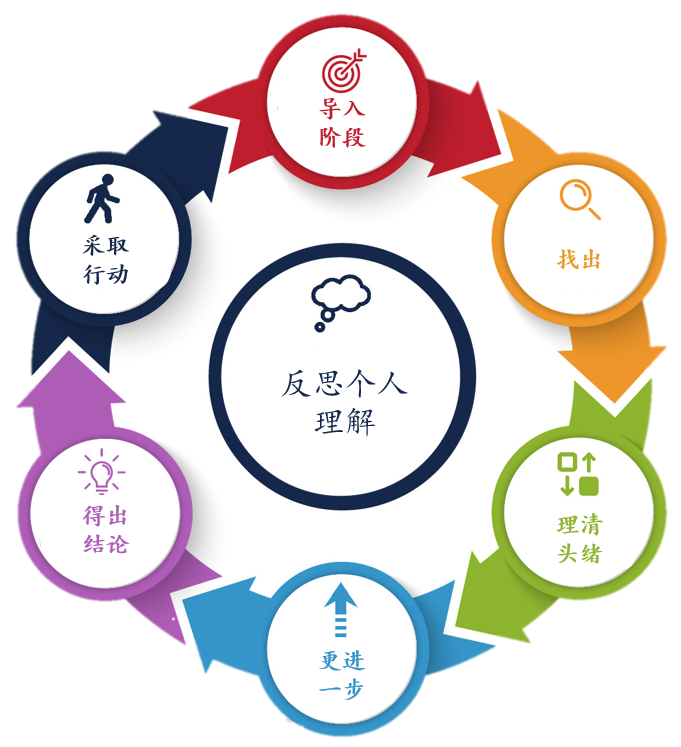
All of this is built upon the Inquiry-Based Learning Cycle—Dehong’s Science lessons guide students through a complete process: from initial encounter, deeper investigation, sorting and classifying, forming conclusions, to practical application.
Classroom Immersion: Becoming Students to Explore the World of Microorganisms
After the conceptual introduction, parents quickly switched into their “Grade 5 student” roles and took part in an inquiry-based Science lesson themed around microorganisms.
1. Learning Objectives & Vocabulary: Laying the Foundation
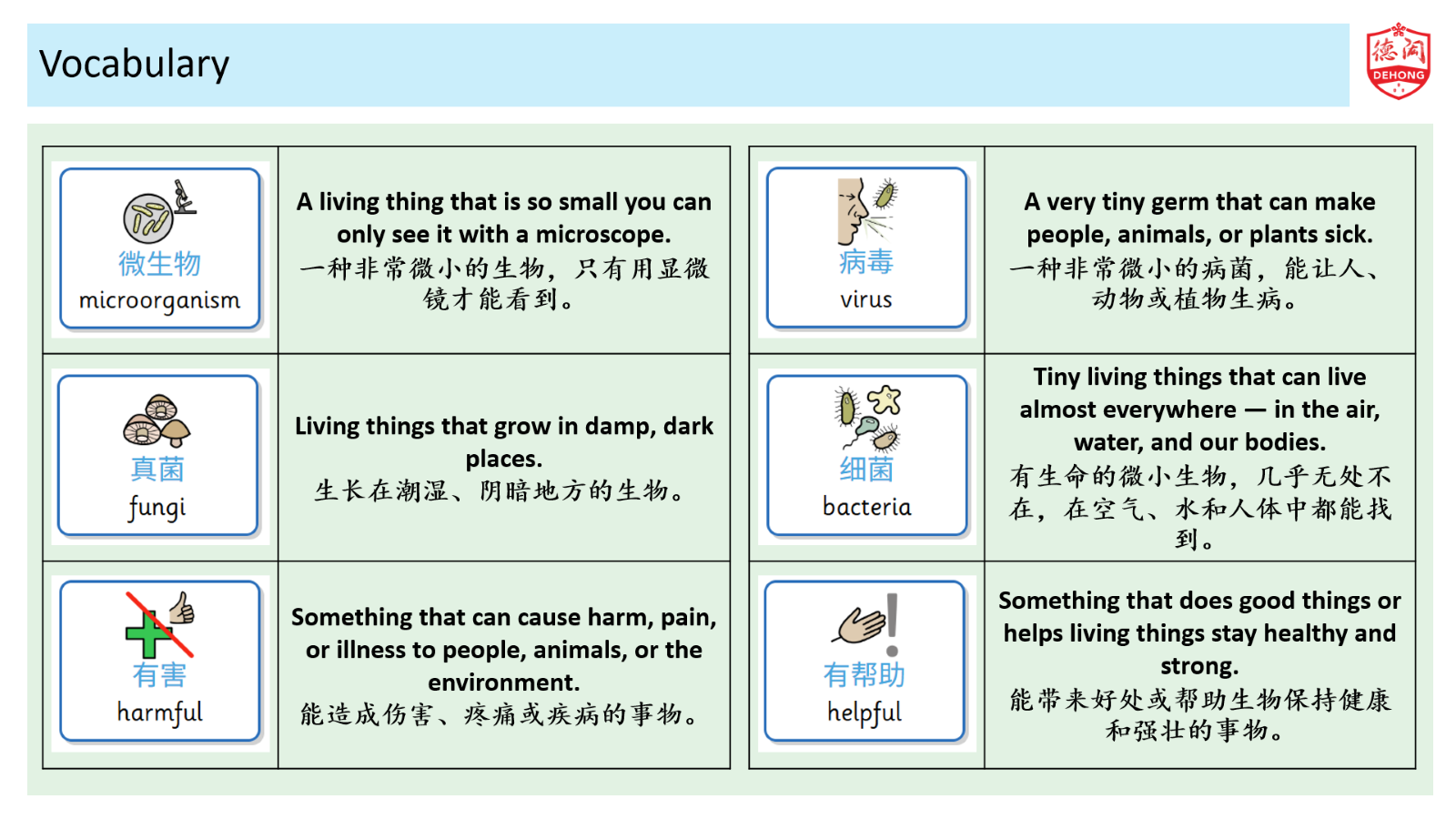
The lesson began by clarifying learning objectives and key scientific vocabulary in English. Using lively and engaging approaches, Mr. Sanidad introduced terms such as microorganism, bacteria, harmful, and helpful. When learning harmful, he encouraged an exaggerated “dodging” gesture, which drew laughter across the room; when learning helpful, everyone spontaneously gave a thumbs-up. A fast-paced “vocabulary flash challenge” brought the energy to a peak—English scientific terms flashed rapidly across the screen, and parents responded instantly with matching gestures. The classroom quickly transformed into a lively space of joyful learning, where scientific vocabulary became memorable through multi-sensory and kinesthetic teaching methods.
Every lesson begins with clear learning objectives—a map that guides students’ exploration. Vocabulary teaching goes beyond repetition—through multi-sensory methods that combine visuals, sound, physical movement, and game-based design, we help students remove language barriers before they begin inquiry.—— Ian Sanidad
2. Inquiry Stations: Igniting Curiosity
“Next, we will move into our inquiry stations.” With that, the classroom instantly transformed into a small open lab, with four interactive stations waiting to be explored.
Parents—now students—enthusiastically scattered into different stations. At the microscope station, a line quickly formed as parents bent forward to observe samples.“Those little moving dots—are they microorganisms?” someone exclaimed. At the reading corner, small groups gathered around illustrated books, discussing magnified fungal images with fascination. At the image station, photos of bacterial colonies drew reactions like:“This pink pattern looks like a flower—can’t believe it’s harmful bacteria!” At the vocabulary station, parents collaborated to match terms with definitions, turning scientific vocabulary into a puzzle challenge. Teachers moved between groups, prompting deeper thinking with guiding questions such as:“How many different shapes do you observe?”“If you were to classify these microorganisms, what criteria would you use?”
“Inquiry stations” are a key part of the inquiry cycle. Our goal is not simply to deliver knowledge, but to create a learning environment that sparks curiosity. Multiple types of stations respect different learning preferences and allow students to explore in ways that feel natural to them. Their choices and questions reveal their prior understanding and interests—valuable data that helps us truly “teach based on learning.”—— Ian Sanidad
3. Hands-On Experiment: From Questions to Verification
As the inquiry activities wrapped up, one parent asked:“Can we grow the microorganisms we observed?” Mr. Sanidad immediately handed out petri dishes and swabs, inviting everyone to collect samples from anywhere in the classroom.
Parents eagerly scattered: Some swabbed their phone screens, some collected samples from their shoe soles, others worked in pairs—one sampling the door handle, the other recording data. “Please gently streak a Z-shape on the agar surface,” Mr. Sanidad demonstrated. “Be careful not to break the agar. After that, close the lid and label your plate.” Parents followed each step with full concentration, resembling novice researchers entering a laboratory for the first time.
Students’ questions are often the best starting point for inquiry. When a child asks “Can we grow the bacteria?” it shows a natural readiness to explore. Although curiosity provides direction, every lesson is carefully designed to balance free exploration and learning goals. These hands-on activities guide students through the full scientific inquiry process—from forming hypotheses, designing sampling methods, following scientific procedures, to recording results. —— Ian Sanidad
4. From Data to Action: Connecting Learning with Real Life
After the hands-on experiment, Ms. Levanya Naicker, EML Assistant Lead, showed the actual results of Year 5 students’ bacterial cultures from this year, comparing them with samples from previous years. When photos of keyboard samples and playground samples were displayed side by side, parents quickly observed: “There are more colonies on the keyboard this year—and they’re denser!”
“What actions can we take?” The teacher guided the group from data interpretation toward real-world application. Parents proposed ideas such as: increasing keyboard cleaning frequency, and reminding students to wash hands correctly. Ms. Naicker then shared real student work: Grade 5 students had written formal recommendations using clear data and accurate scientific English. Their suggestions ultimately led to the school implementing a regular cleaning schedule for computer lab keyboards. Parents responded with surprise and admiration: “A simple experiment can lead to real change!”
We believe learning should not end with a test—it should lead to responsible action. When students discover that what they learn can genuinely improve their environment and positively impact others, the sense of purpose and responsibility they gain is irreplaceable. This is the deep learning and holistic education we pursue at Dehong. —— Levanya Naicker
Showcase of Learning: From Process to Assessment, Witnessing Deep Learning in Action
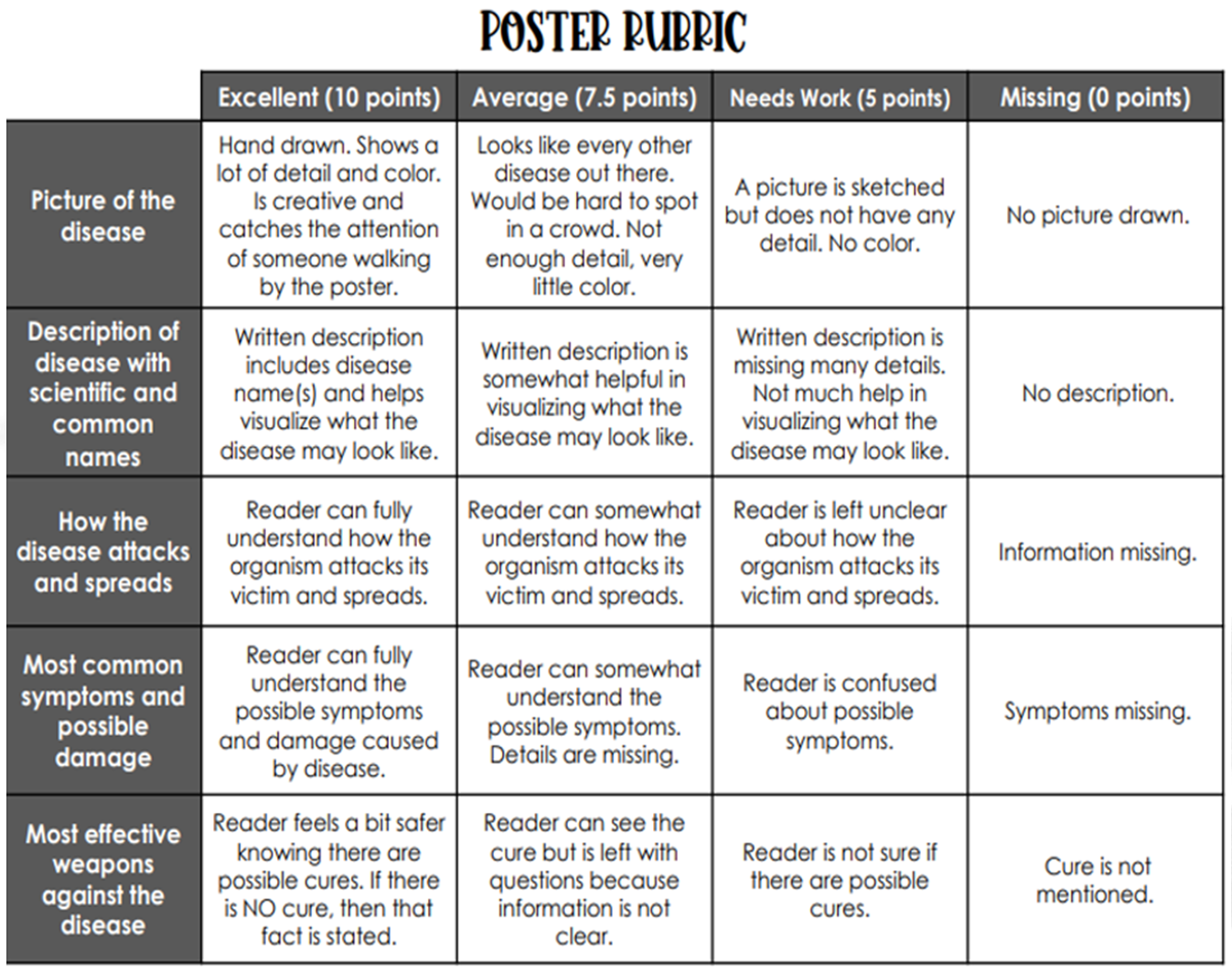
At the end of the session, Ms. Levanya introduced the final assessment task of this unit: students were required to design their own “virus.”
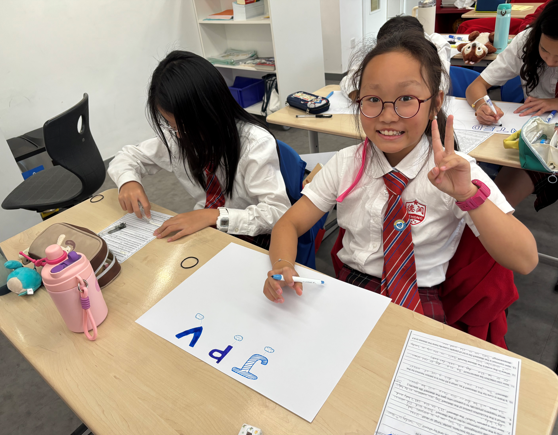
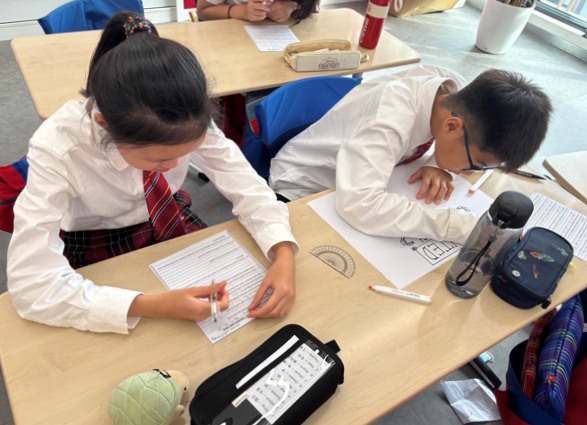
The displayed example—“The Sleep Virus,” which spreads through yawning and causes sudden drowsiness—immediately caught parents’ attention with its creativity. The teacher explained that the assessment criteria include: scientific accuracy, creativity, clarity of presentation and quality of language usage. Students must integrate what they learned to complete the task in a way that is both imaginative and logical.
Assessment is a natural extension of the learning process. Besides posters, assessments in other units also include quizzes, group presentations, models, written reports, and practical demonstrations. Our assessment design values creativity, scientific understanding, and real-world application. When students understand what success looks like, they become the leaders of their own learning. ——Levanya Naicker
In Dehong, science learning begins with curiosity, deepens through practice, and culminates in application. As parents left the classroom carrying the bacterial samples they had cultivated themselves, each wore a satisfied smile. This activity went beyond typical home–school interaction—it became a shared learning journey that allowed parents to truly experience their children’s daily learning at Dehong.
The inquiry journey experienced in this Parent Academy session is only a snapshot of everyday teaching at Dehong. Moving forward, Dehong Elementary School will continue to offer subject-based interactive experiences and exhibitions of student learning—such as the upcoming English Learning Exhibition on November 24. We look forward to partnering with every Dehong family to protect children’s natural curiosity and nurture the core competencies they need for the future.